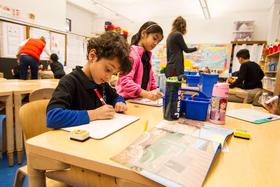
With classrooms becoming more diverse, public schools are experimenting with new language programs to enhance ESL student learning.
ESL students, standing for English as a Second Language, typically need additional resources and support to adjust to the various linguistic complications of learning a new language. As a result, ESL students typically require additional funding.
However, as public schools are coping with reduced funding due to the economic recession, educational experts debate the best approach to balancing school budgets while caring for each child鈥檚 language development. To save costs, some schools and states have created mandatory full inclusion programs, where ESL students are immersed in a regular-paced English class with fluent English speakers. This strategy will reduce the costs of ESL specialists while still engaging ESL students in an atmosphere for learning.
While this approach helps balance school budgets, many educators and parents argue that the full-inclusion classroom is ineffective for both fluent and ESL children.
Public Schools and ESL Programs
As The Multicultural Education Journal explains, the 2001 national mandate, No Child Left Behind, required all public schools to help ESL students become proficient in English, as both fluent and ESL students are mandated to meet state and national achievement standards. While public schools are legally required to provide educational support for ESL kids, many experts assert that the current approach is ineffective and flawed. As the number of minority students is rising each year in the United States, experts predict that by the