
For the 2026 school year, there is 1 public school serving 579 students in the neighborhood of Rose Park South, Long Beach, CA.
The neighborhood of Rose Park South, Long Beach, CA public school have an average math proficiency score of 22% (versus the California public school average of 34%).
Minority enrollment is 96% of the student body (majority Hispanic), which is more than the California public school average of 80% (majority Hispanic).
Best Public Schools in the neighborhood of Rose Park South, Long Beach, CA (2026)
School
(Math and Reading Proficiency)
(Math and Reading Proficiency)
Location
Quick Facts
Rank: #11.
Burbank Elementary School
(Math: 29% | Reading: 39%)
Rank:
Rank:
5/
Bottom 50%10
501 Junipero Ave.
Long Beach, CA 90814
(562) 439-0997
Long Beach, CA 90814
(562) 439-0997
Gr: K-5 | 563 students Student-teacher ratio: 27:1 Minority enrollment: 96%
Frequently Asked Questions
What are the top-ranked public schools in the neighborhood of Rose Park South, Long Beach, CA?
The top-ranked public schools in the neighborhood of Rose Park South, Long Beach, CA include Burbank Elementary School.
How many public schools are located in the neighborhood of Rose Park South, Long Beach?
1 public schools are located in the neighborhood of Rose Park South, Long Beach.
What is the racial composition of students in the neighborhood of Rose Park South, Long Beach?
the neighborhood of Rose Park South, Long Beach public schools minority enrollment is 96% of the student body (majority Hispanic), which is more than the California public schools average of 80% (majority Hispanic).
Recent Articles

Multilingual Learner Growth Models & Accountability
Learn how multilingual learner growth models are reshaping school accountability systems and what it means for public schools in 2026.

School-Based Health Clinics: Funding, Billing, and Student Access
Learn how school-based health clinics are funded, how billing works, and how students access care in public schools.
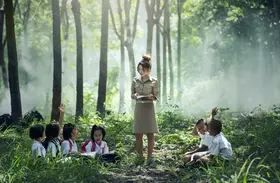
Outdoor Learning in Urban Schools: Forest School Programs
Explore how urban districts adopt outdoor learning and forest school programs to boost student engagement, well-being, and academic success.