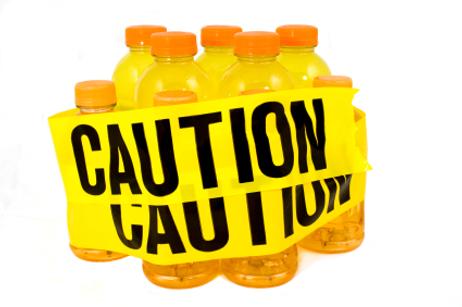
Gatorade has long been touted as the sports drink of the American athlete, from the traditional dunking of the pro football coach after a victory to professional NBA players making appearances in Gatorade commercials. Beverages are popular in school vending machines today, particularly since soda has been removed from most of the hallowed halls of secondary academia.
However, if these beverages really good for you, why are more lawmakers pushing to have them banned from school along with the caramel-colored, carbonated counterparts?
Bidding Farewell in California?
According to a recent report in the L.A. Times, the state senate in California and the Assembly's Education Committee recently passed SB1255 to remove Gatorade and other sugar-laden sports drinks from schools. The bill, originally introduced by former bodybuilder and current Governor of California, Arnold Schwarzenegger, will next go to the Assembly Health Committee for approval.
Why the attack on seemingly innocent and colorful sports beverages? It turns out these drinks boast a powerful punch of sugar and sodium, which may counter the potential health benefits for most children. Despite the abundance of electrolytes in the formulas, these beverages can also contribute to the obesity problem in this country, and they may even raise the risk of high blood pressure issues in younger patients, thanks to the high sodium content.
This video explains how sports drinks are loaded with sugar that kids just don鈥檛 need when they get out and play.
Nationally, the move to ban sports drinks from school was introduced nearly three years ago by Senator Tom Harkin (D-Iowa), with a bill allowing the government to set nutritional standards for food and beverages sold in high schools outside of the cafeteria. The bill was reported in the in September 2007. Many advocates of the bill wanted the bill to include the ban on sports drinks, but the move was opposed by beverage bottlers like Coca-Cola and Pepsi, whose annual sales of sports drinks reached $7.5 billion in 2006.
What's in Gatorade?
A 20-ounce bottle of lemon-lime Gatorade has 130 calories, 34 grams of sugar, and 270 mg. of sodium. The sodium content makes up 11% of the recommended daily allowance for adults and 12% of the recommended allowance for teenagers. In contrast, a 12-ounce can of Pepsi contains 150 calories, 41 grams of sugar, and just 30 mg of sodium, or one percent of an adult's daily allowance. According to the Washington Post article, most children already receive more than enough sodium daily, which could lead to hypertension later in life.
This video gives a negative overview of Gatorade.
When Sports Drinks are Appropriate
Despite the concern over these beverages by many nutritionists and some lawmakers, there are times when Gatorade is a better choice than water. WebMD states these beverages are appropriate for athletes undergoing long, intense workouts. The website reports the American College of Sports Medicine's recommendation of "flavored drinks when fluid replacement is needed during and after exercise to enhance palatability and promote fluid replacement."
An article on KidsGrowth.com suggests that athletes who are participating in high-intensity events that last longer than 90 minutes might consider a sports drink rather than good old-fashioned H2O. However, the article also states that most children and teens will not fall into this category very often.
concurs with this assessment. Lawrence E. Armstrong, Ph.D., professor of environmental and exercise physiology at the University of Connecticut in Storrs, told Parents.com, "It's unlikely that children who participate in youth athletics would require these beverages. A child's well-balanced diet provides ample amounts of electrolytes, water and carbohydrates." Children who are exercising for an hour or more or who have a preexisting mineral or carbohydrate deficiency would be good candidates for sports drinks, according to Armstrong.
While these beverages may offer less sugar content than soda, the University of California at Berkeley's Robert C. and Veronica Atkins Center for Weight and Health predicts that students who drink one sports drink a day for a full year may gain as much as 13 pounds. This reality has led Connecticut schools to ban the sale of the beverages, while other states, like California, continue to debate the issue. At this time, federal lawmakers have been unable to pass national guidelines, allowing states to continue determining their own path in the controversy.
This video explains the benefits of water over sports drinks.
Parents who are concerned with their children consuming too much sugar and sodium from Gatorade and similar beverages can encourage kids to choose water over other, more colorful drinks whenever possible. The Institute of Medicine has dubbed these drinks the "equivalent of flavored water, noting their high sugar content." Senator Harkin told the Washington Post, "If the beverage industry is serious about the health of our kids, as it repeatedly claims to be, science and sound health should be the guiding principle." Hopefully, the new legislation will prompt them to take our children鈥檚 health more seriously.
Questions? Contact us on Facebook. @publicschoolreview